
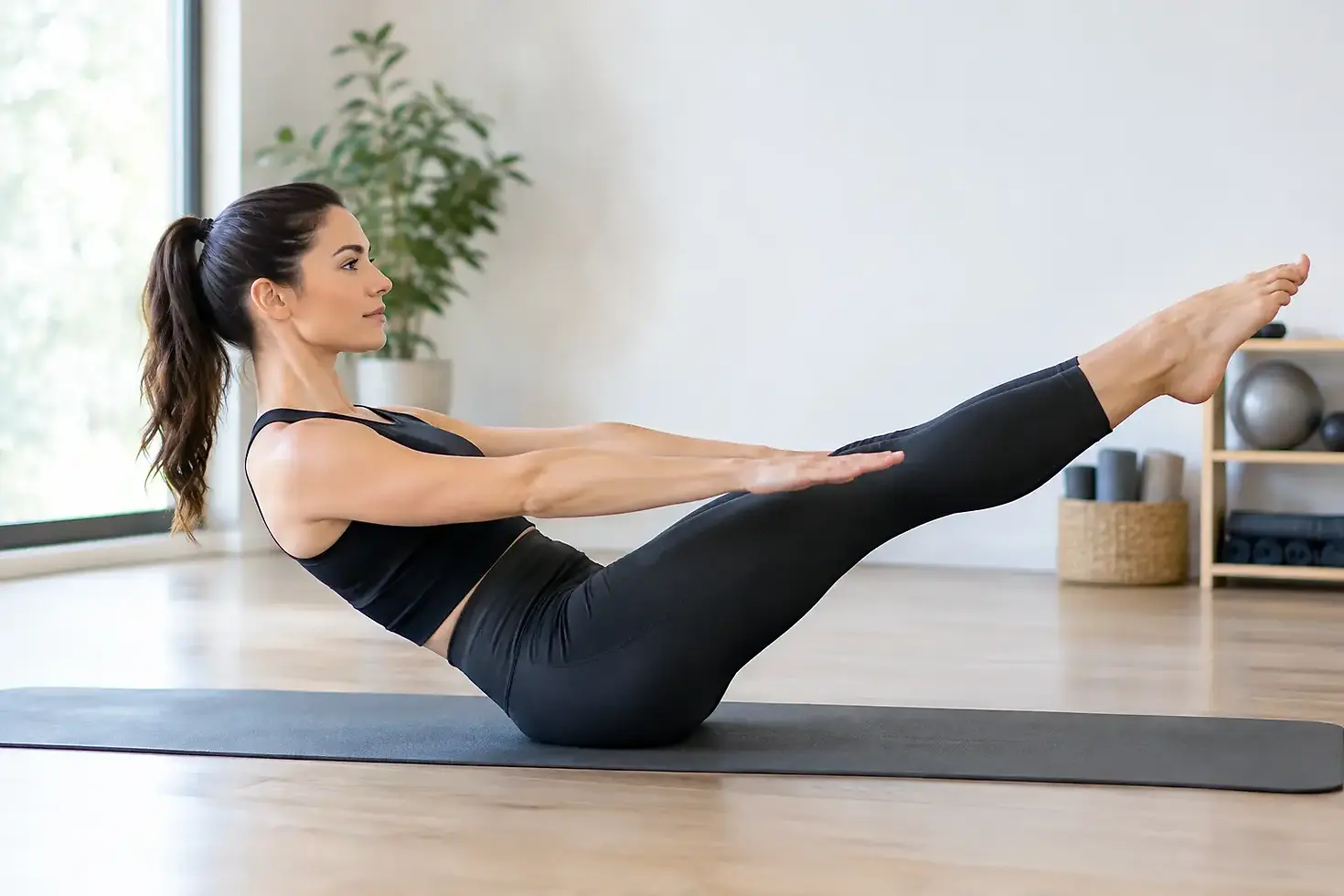
Pilates for Core Stability That Supports Real Life

Your core is already working before the first plank, hundred, or teaser. It helps you sit up at your desk, carry groceries from the car, reach for a high shelf, and catch yourself when the dog changes direction mid-walk. Pilates for core stability is not about chasing a tighter midsection or holding your breath through a hard exercise. It is about building the steady, responsive support that helps everyday movement feel more confident.
For many people, “core work” brings to mind endless crunches. Pilates takes a different route. Through intentional breath, controlled movement, and thoughtful alignment, it teaches your body how to share the work. Your abdominals matter, of course, but so do your hips, back, pelvic floor, diaphragm, and the small stabilizing muscles that help you move without gripping or bracing through every task.
What Core Stability Really Means
Core stability is your ability to maintain or return to a supported, organized position while you breathe and move. That might mean keeping your trunk steady as one leg lifts, controlling a twist as you reach across your body, or finding balance when you step off a curb.
It is not the same as being perfectly still. A stable core can adapt. It responds when you change position, shift weight, or meet resistance. Think less “lock everything down” and more “create enough support for the movement in front of you.”
This distinction matters because life rarely happens in a rigid posture. You bend, rotate, stumble, lift, and reach. Pilates practice gives you a place to slow those patterns down, notice what your body is doing, and build options that carry into your day.
Your Core Is More Than Your Abs
The muscles at the front of the abdomen are part of the picture, but they are not the whole picture. Core support also includes deeper abdominal muscles, muscles along the spine, the diaphragm, the pelvic floor, and the hips. These areas communicate constantly.
When breathing becomes shallow or you tense your shoulders to “help,” that communication can get noisy. When the ribs, pelvis, and spine are given a workable relationship, your body often finds more efficient support. This is why a Pilates class may include exercises that look simple but feel surprisingly specific. A heel slide or tabletop toe tap can reveal a lot about how you stabilize.
Why Pilates Builds Core Stability Differently
Pilates asks for attention before intensity. You may move slowly enough to feel whether your pelvis shifts, whether your ribs flare, or whether your neck is taking over. That awareness is valuable. It helps you recognize the difference between healthy effort and a strategy that leaves you sore, compressed, or frustrated.
Breath is a major part of the practice. A well-timed exhale can help you connect with deep abdominal support without clenching every muscle you own. Inhaling can create space through the ribs and back body, making movement feel less restricted. There is no prize for the biggest breath or the strongest brace. The goal is a breath that stays available while you work.
Pilates also trains stability through movement, not only through holds. You might keep your torso organized while your arms reach overhead, your legs extend, or your body rotates. Those patterns are closer to real life than a single all-out abdominal exercise.
A Strong Foundation Starts With Alignment
Good alignment is not about forcing your body into one “correct” shape. Bodies vary, and posture changes throughout the day. Instead, alignment gives you useful starting points: where your ribs are resting, how your pelvis is positioned, whether your shoulders are free to move, and how weight is distributed through your feet or hands.
In Pilates, an instructor may offer cues such as softening the ribs, lengthening through the crown of the head, or noticing the natural curves of the spine. These are invitations to explore, not tests to pass. If a cue does not make sense in your body, a different image or modification may work better.
That is especially true if you are returning to movement after a long break, managing back discomfort, recovering from an injury, navigating pregnancy or postpartum changes, or simply feeling stiff from a busy week. The best exercise is not automatically the hardest version. It is the version you can perform with enough control, breath, and consistency to learn from it.
Neutral Spine, Imprint, and Choice
You may hear Pilates teachers mention neutral spine or imprint. Neutral generally refers to honoring the spine’s natural curves rather than flattening the low back. Imprint is a gentle rounding or softening of the low back toward the mat, often used to make certain movements feel more supported.
Neither position is universally better. A neutral spine may be helpful when practicing functional hip movement or standing work. Imprint may feel more comfortable during an abdominal exercise, especially while learning how to control the pelvis. Your body, the exercise, and your goals all matter.
The useful question is not, “Which position is right forever?” It is, “Can I choose a position and move with control from there?”
Pilates Exercises That Teach Steady Support
A balanced class will include more than abdominal exercises because core stability is a full-body conversation. Still, several familiar Pilates movements are particularly helpful for building awareness and control.
Pelvic clocks and pelvic tilts are often a friendly place to start. Lying on your back with bent knees, you gently explore small movements of the pelvis. The range is small, but the information is big. You begin to notice how your low back, hips, and rib cage respond.
Dead-bug variations, including tabletop toe taps, train you to move a leg while maintaining support through the trunk. If your back arches, ribs pop up, or breath disappears, the movement may simply be too large right now. Shortening the range is not “making it easy.” It is choosing the version that builds the skill.
Bridges strengthen the back of the body while inviting coordination through the feet, hips, and trunk. The goal is not to lift as high as possible. Aim for a smooth lift and lower, with your knees tracking comfortably and your jaw staying relaxed.
Side-lying leg work and clamshell-style movements can build hip stability, which matters for the way your pelvis and core support walking, stairs, and balance. Quadruped work, such as a modified bird dog, adds the challenge of bearing weight through the hands while reaching an opposite arm or leg.
Planks have a place, too, but they are not the finish line. A wall plank, incline plank, or knees-down version can be an excellent choice when it allows you to breathe, press evenly through your hands, and avoid sinking into the shoulders. More time is not always better. A few well-supported breaths can teach more than a long hold performed with strain.
How Often Should You Practice?
Consistency usually matters more than marathon sessions. Two or three Pilates classes or short practices per week can create meaningful changes in awareness, coordination, and strength over time. If that feels like too much, begin with one class and a few minutes of intentional movement on another day.
Progress is not always dramatic. You may first notice that getting out of bed feels easier, your balance improves during a walk, or your shoulders stay softer while carrying a bag. Those are real wins. Core stability often shows up as more ease, not just more intensity.
It also helps to pair Pilates with the movement you enjoy. Walking, yoga, martial arts, strength training, cycling, and recreational sports can all benefit from better body awareness. Pilates does not have to replace your favorite activity. It can support it.
What to Expect in a Welcoming Pilates Class
A supportive class should make room for questions, modifications, and days when your energy is different. You do not need prior experience, matching workout clothes, or the ability to touch your toes. You only need curiosity and a willingness to pay attention.
Let your instructor know about injuries, pain, recent surgery, pregnancy, or concerns about a movement. They can help you adjust range, add props, or choose another option. Pain is not a badge of effort. Sharp, pinching, or radiating pain is a reason to stop and ask for guidance.
At The Mat, Pilates can be a practical way to build strength while staying connected to your breath and your community. Every body brings a different history to the mat, and thoughtful instruction helps make the work feel available rather than intimidating.
Your next core-strengthening practice does not need to be perfect or punishing. Start with one steady breath, one controlled movement, and one choice that helps your body feel supported. That is where lasting strength begins.


Comments