
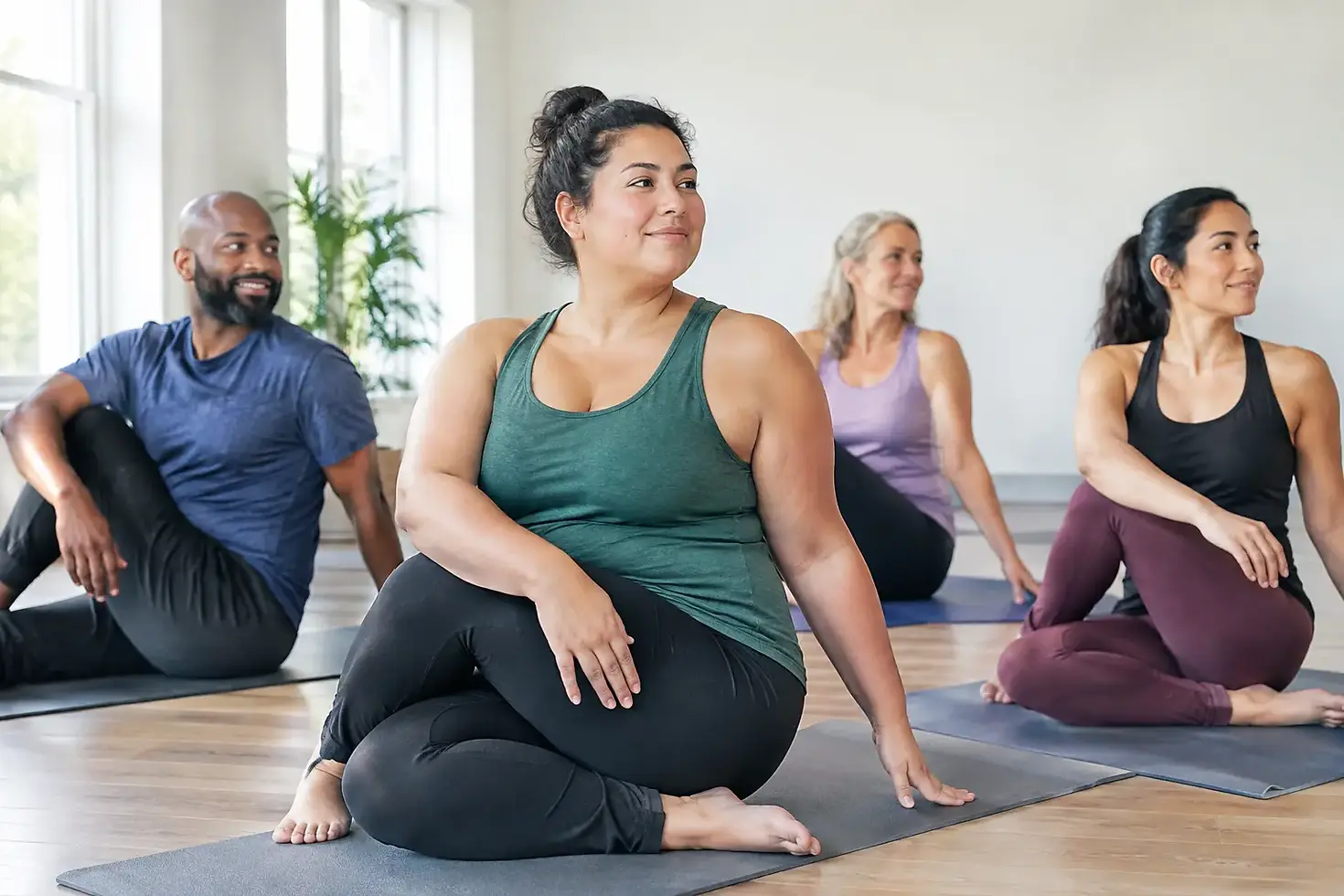
Inclusive Yoga for All Bodies Starts Here @The Mat

A yoga room should not ask you to earn your place in it. You should not have to be flexible enough, quiet enough, strong enough, or familiar with Sanskrit to belong. Inclusive yoga for all bodies begins with a simpler idea: your body is not a problem to solve before class starts. It is the body you bring to the mat, and it deserves thoughtful movement, clear options, and encouragement.
For some people, that means returning to movement after an injury, a pregnancy, a long break, or a difficult season. For others, it means learning to move in a larger body, with chronic pain, limited mobility, anxiety, neurodivergence, or a schedule that leaves little room to breathe. The details vary, but the need is the same: a practice that meets you where you are and gives you somewhere to grow.
What Inclusive Yoga for All Bodies Really Means
Inclusive yoga is not one gentle class tucked into a full schedule of intimidating options. It is an approach to teaching that recognizes every student has different proportions, histories, goals, energy levels, and access needs. A pose may look different from person to person because bodies are different. That is not a compromise. It is good teaching.
In an inclusive class, the teacher offers choices without treating one version as the correct version and every other option as a lesser substitute. You might practice Down Dog at the wall, with hands on blocks, from hands and knees, or take Child's Pose. You may bend your knees in a forward fold, use a chair for balance, or skip a shape that does not feel right today. The intention stays present even when the posture changes.
That distinction matters. Yoga can build strength, mobility, balance, and stress relief, but it can also become discouraging when it is taught as a performance. The goal is not to copy the person on the mat beside you. The goal is to notice your breath, build a relationship with your body, and practice with enough challenge to feel engaged without pushing past your own signals.
Signs a Yoga Class Is Built for Real Bodies
A welcoming studio may have beautiful lighting, friendly faces, and a packed calendar. Those things are lovely, but inclusion shows up most clearly in the way a class is taught. Listen for language that gives you agency. Phrases such as choose what serves you, take the variation that feels steady, or rest at any time tell students that their experience matters.
Look for instructors who demonstrate and explain options. A helpful modification is more than a quick suggestion to grab a block. It includes why the option may help. For example, elevating your hands can create more space through the hips and hamstrings in a lunge. Placing a blanket under the knees can reduce pressure in kneeling poses. Widening your stance can offer more room for balance and breath.
Good alignment guidance is also inclusive, not rigid. Alignment is not about forcing every body into identical angles. It is about finding a position that supports your joints, breath, and intention. A teacher may cue you to create length through the spine, ground through your feet, or keep the knees tracking in a comfortable direction. Then they should leave room for your actual anatomy.
Class culture matters, too. Students should be able to arrive late without shame when life happens, take water, use the restroom, wear comfortable clothing, and rest without feeling watched. A peaceful room does not require everyone to move in the same way. It requires mutual respect.
Start With the Practice That Fits Your Day
The best class is not always the one that looks most impressive on a schedule. It is the one you can attend consistently and leave feeling more connected to yourself. If you are new, recovering, managing pain, or carrying a lot of stress, restorative yoga, gentle flow, beginner classes, or meditation can be a supportive starting point. Slower pacing gives you time to learn transitions, ask questions, and recognize how a pose feels in your body.
If you want more heat, strength, or cardiovascular challenge, a dynamic flow class may be a great fit. You do not need to wait until you are advanced to join, but it helps to approach the practice with curiosity rather than pressure. Take breaks. Choose the foundation before the fuller expression. A lower lunge can be every bit as purposeful as a deeper variation when it lets you breathe and move with control.
Pilates can also complement yoga beautifully, especially for students who want focused work on core stability, posture, and functional strength. Martial arts offers another path into confidence, coordination, and body awareness. Different movement practices ask different things of us, and that variety can help you find what feels sustainable rather than forcing one format to meet every need.
Modifications Are Part of the Practice
There is a common misconception that props are only for beginners. In reality, experienced practitioners use blocks, straps, bolsters, blankets, chairs, and walls because props give useful feedback and create more possibilities. They can make a pose more accessible, more stable, or more specific to the intention of the class.
A block under the hand in Triangle Pose may help you keep length through both sides of the waist. A strap in a seated fold can bring the feet closer without rounding aggressively through the spine. A bolster in restorative poses can make it easier for the nervous system to settle. None of these choices mean you are doing less yoga. They mean you are practicing with awareness.
Modifications also change from day to day. The version of a pose that feels strong on Tuesday might feel like too much on Thursday after poor sleep, a long drive, or a demanding week. Checking in with yourself is not quitting. It is a skill.
How to Advocate for What You Need
You do not need a polished explanation of your body to attend class. Still, a brief conversation before class can help an instructor support you well. You might mention that you have a sensitive wrist, are returning after surgery, prefer not to receive hands-on adjustments, or feel nervous in a group setting. A skilled teacher can suggest options while respecting your privacy.
It is also okay to ask direct questions. Is this class appropriate for someone new to yoga? Are chairs or props available? Can I move at my own pace? What should I do if a posture hurts? The answers can tell you a lot about the environment.
Pain is different from effort. Muscles working, breath quickening, and a little healthy uncertainty can all be part of learning. Sharp, pinching, numb, or escalating pain is a reason to back out, change the shape, or rest. If you have an injury or medical concern, work with the guidance of a qualified healthcare professional and let your instructor know what movement boundaries you have been given.
Belonging Changes the Way We Move
When people feel safe from judgment, they are more likely to try, rest, laugh, and return. That is where consistency grows. A familiar teacher can notice your progress. A classmate can become the person who saves you a spot. A weekly practice can become a steady point in a busy life.
At The Mat, that community-centered approach means offering pathways for different seasons of movement, from restorative practice and alignment workshops to energetic flows, Pilates, meditation, and martial arts. The point is not to fit one image of wellness. It is to build confidence in the body you have and the life you are living.
Your yoga practice does not need to look graceful from across the room to be meaningful. It can be a wobbly balance pose, a supported rest, a strong exhale, or the choice to come back after time away. Find a space that welcomes those moments, then let your practice be yours.


Comments